Accessibility and inclusion
Accessibility statement
Accessibility is at the heart of my work.
In my professional life, I work in content Design and strategy, helping to create accessible digital services and content.
In my yoga teaching, I bring the same commitment to reducing barriers, increasing participation, and creating environments where people can engage in ways that work for them.
I believe yoga belongs to everyone.
My mission is to create welcoming, safer, inclusive spaces where people can explore the teachings and practices of yoga regardless of ability, age, race, ethnicity, gender, sexuality, body size, faith, financial circumstances, or background.
My teaching is informed by the social model of disability, which recognises that people are often disabled not by their bodies or minds, but by barriers within environments, systems, and attitudes.
Accessibility is therefore not an individual responsibility but a shared commitment to creating spaces where people can participate, belong, and thrive.
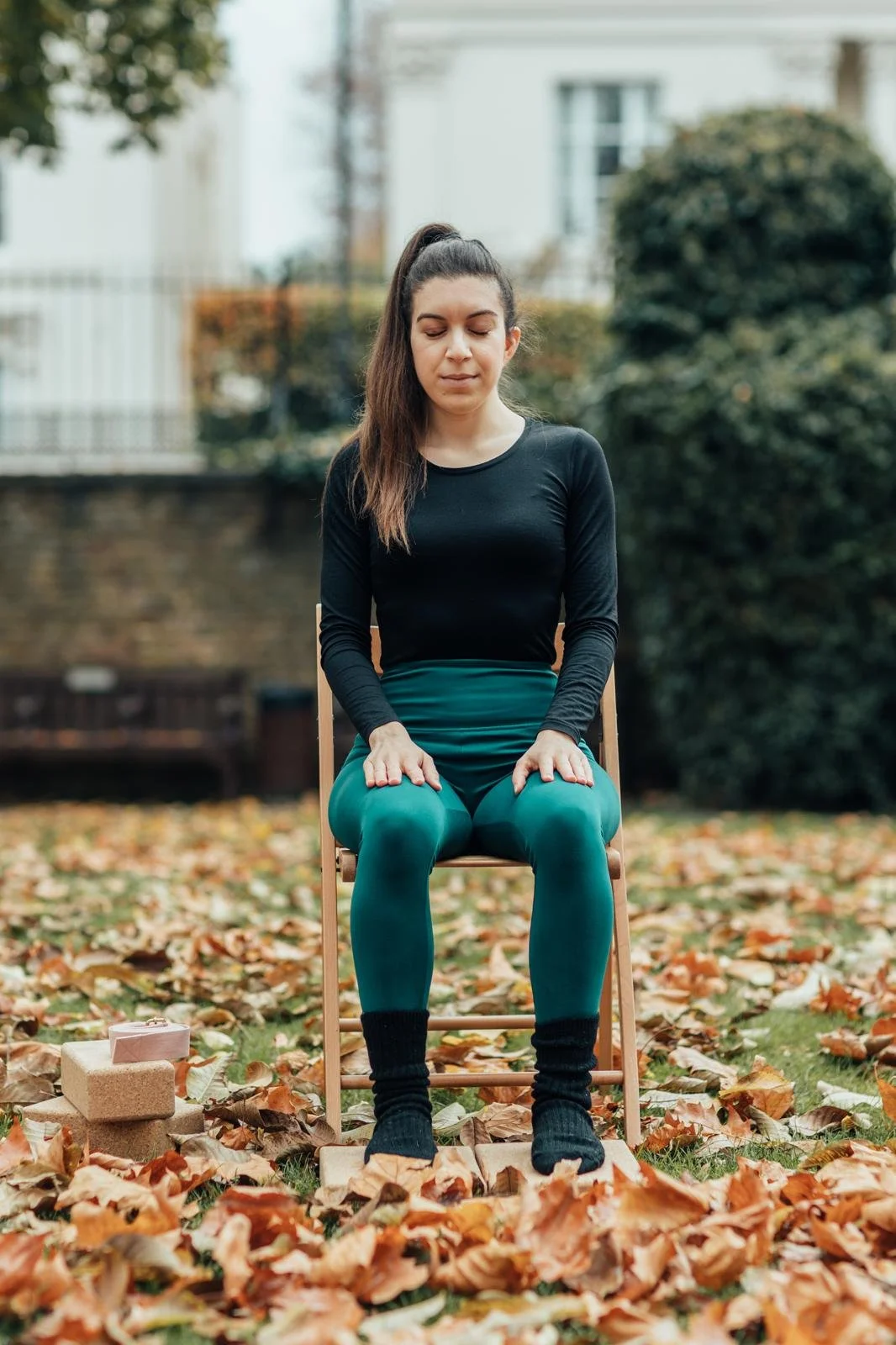
I specialise in inclusive, adaptive, hatha and vinyasa yoga. My classes incorporate options, variations, props, and trauma-aware guidance to support a wide range of bodies, abilities, and experiences.
I encourage students to make choices that work for them and to approach practice with curiosity rather than performance.
Accessibility is an ongoing practice rather than a fixed destination.
I recognise that no space can be perfectly accessible to everyone, and I remain committed to listening, learning, and making adjustments wherever possible.
Values
Financial access
I believe financial circumstances should not be a barrier to accessing yoga. My classes are offered on a sliding scale designed to balance accessibility with sustainability.
This approach recognises that people have different financial realities and allows those who are able to contribute more to help support the wider community.
If cost is a barrier, please get in touch. I will always do my best to find a way to make participation possible.
Disability access
I welcome disabled, chronically ill, neurodivergent, deaf, and otherwise marginalised participants.
I recognise that access needs vary from person to person and that accessibility is not one-size-fits-all.
Students are encouraged to move, rest, modify, adapt, pause, or opt out of any practice at any time. Rest is a valid form of participation.
I aim to create classes that offer choice rather than obligation, invitations rather than demands, and flexibility rather than rigid expectations.
If there is anything that would help you participate more fully, I welcome conversations about access needs before or during class.
You are never required to disclose personal or medical information. However, if you feel comfortable sharing information about your disability, health condition, injury, neurodivergence, or access needs, it can help me better understand how to support you and, where appropriate, prepare or research adaptations in advance.
I may not always have all the answers, but I am committed to listening, learning, and doing my best to create an environment where you can participate in ways that work for you.
Yoga, lineage and cultural respect
Yoga is a rich and diverse tradition with roots in South Asia. I approach the practice with humility, respect, and gratitude for the teachers, communities, and traditions that have shaped and preserved it.
I believe that teaching yoga carries a responsibility to honour its cultural roots while making its practices accessible and relevant to contemporary students. This includes ongoing study, self-reflection, and a willingness to learn from both teachers and students.
I am a student of Mia Togo and have completed trainings with teachers including Jivana Heyman, Susanna Barkataki, Matthew Sanford, Radhika Das, and Anna Ashby, among others. Their teachings continue to influence how I understand accessibility, embodiment, philosophy, cultural respect, and the broader purpose of yoga.
I do not view learning as something that is ever complete. My commitment is to continue studying, listening, and deepening my understanding of yoga’s history, traditions, and teachings, while sharing them with care, respect, and integrity.
Accountability
I recognise that creating accessible and inclusive spaces is an ongoing practice rather than an achievement.
As a white teacher, I am committed to continuous learning, self-reflection, and accountability. This includes examining my own biases, assumptions, and blind spots, and engaging in ongoing learning around anti-racism, accessibility, equity, inclusion, and the cultural roots of yoga.
I recognise that my experiences are shaped by both privilege and lived experience.
While I appear able-bodied, I live with hidden disabilities and am neurodivergent. These experiences inform my teaching, but they do not define the experiences of others.
I do not expect perfection from myself or from those who practise with me. I do believe in accountability, repair and a willingness to learn when mistakes are made.
I welcome respectful feedback and remain committed to creating spaces where people feel seen, included, respected, and valued.
Community agreements
To help cultivate a respectful and supportive environment, I invite all community members to practise with the following agreements:
Practice safely and honour your body’s needs.
Do no harm — to yourself or to others.
Respect the experiences, identities, boundaries, and perspectives of others.
Speak your truth and allow others to speak theirs.
Take responsibility for your impact as well as your intentions.
Remain open to learning, reflection, and growth.
Remember that you are the expert in your own body and experience.
Together, these agreements help us create safer spaces where people can practise, connect, and learn with care and respect.